Soft Wash Roof Cleaning
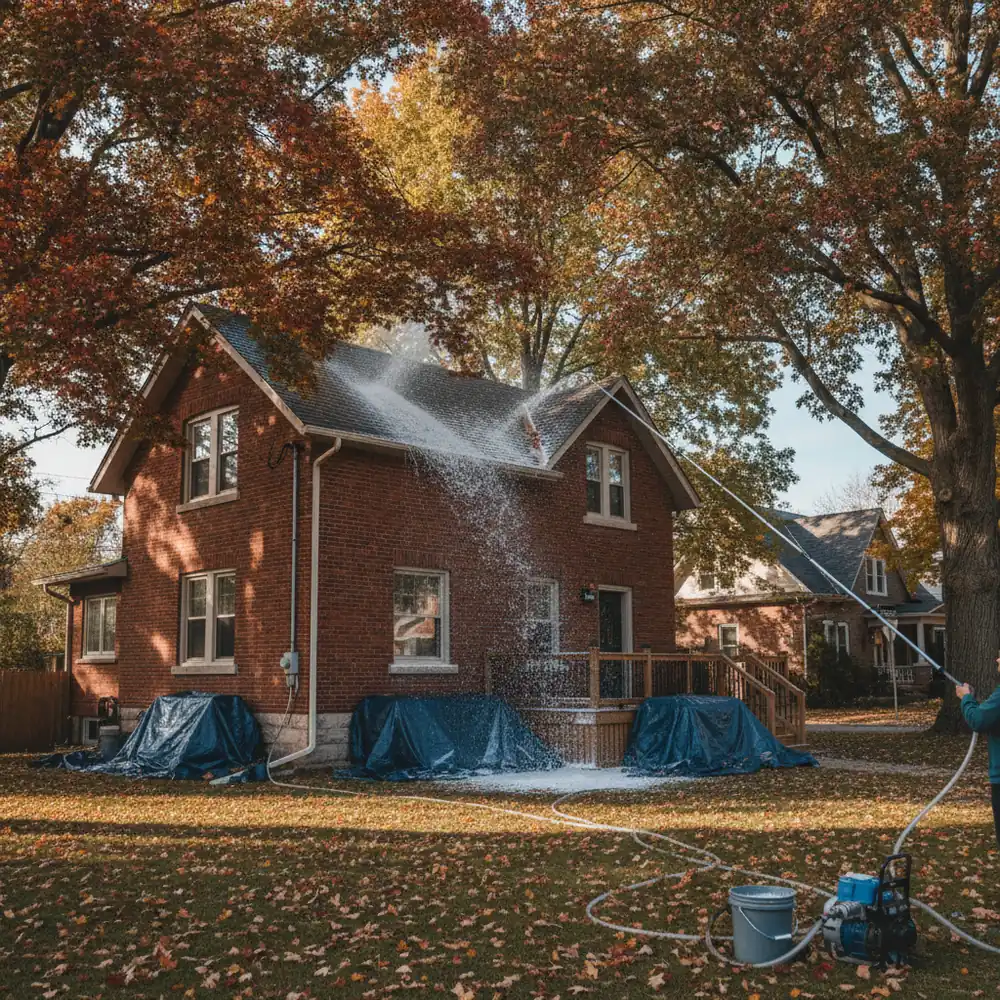
Those black or greenish streaks running down a roof aren't dirt washing off the shingles — they're a living algae (gloeocapsa magna) that feeds on the limestone filler in asphalt shingles and spreads over time. Pressure washing might blast some of it off temporarily, but it strips protective granules in the process and typically voids the shingle manufacturer's warranty.
Soft washing uses a low-pressure application of an algaecide/biocide solution that kills the algae at the root, followed by a gentle low-pressure rinse — the industry-recommended method for a reason. Results also last longer than pressure washing since the algae is actually killed, not just knocked loose.
- Low-pressure application — won't strip shingle granules or void warranty
- Algaecide solution kills algae at the root, not just surface streaking
- Safe for asphalt, metal and most roofing materials
- Longer-lasting results than pressure washing
What it costs in Kitchener
- Average single-storey home: $400–$600
- Two-storey or steep-pitch roof: $500–$800
- Heavy moss/algae coverage: may add $100–$150
- Pricing depends on roof size, pitch and access
Soft Wash Roof Cleaning FAQs
Will this damage my shingles?
No — that's the whole point of soft washing versus pressure washing. Low pressure plus the right chemistry removes algae without stripping granules or damaging the roofing material.
How long do results last?
Typically 2–4 years before streaking starts returning, longer than pressure washing since the algae is actually killed rather than just knocked off temporarily.
Is it safe for landscaping below?
Crews rinse and manage runoff to minimize impact on plantings — let us know about sensitive gardens when booking.
Can you clean metal roofing too?
Yes — soft washing is safe for metal roofing as well as asphalt shingles; the approach is adjusted slightly per material.